Friday, November 21, 2014

Entity Level Business Model - Example Part 1

In the next three Blogs I will construct a Generic Consumer Goods Organisation’s Entity Business Model.
  • Part 1 - Include the Entity Business Model and Strategic Processes
  • Part 2 - Includes the Core Business Processes
  • Part 3 - Includes the Resource Processes

Consumer Goods - Entity Business Model

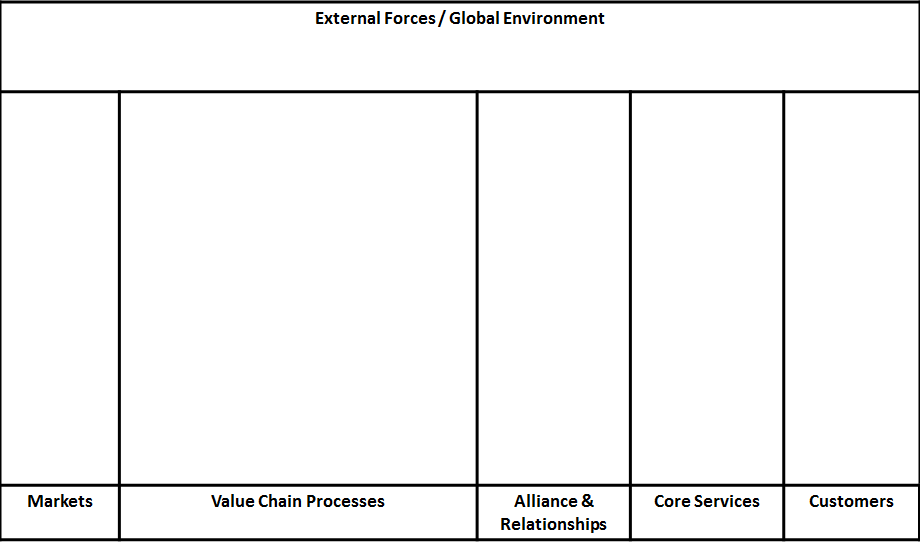
As discussed in the previous Blog the Entity Business Model is used to describe the inter-linking activities carried out within a business entity, the external business drivers and stakeholders that bear upon the entity, and the business relationships with persons outside the entity.
Entity Business Model - Consumer Products.png

External Business Drivers and Stakeholders

External Business Drivers and Stakeholders are those outside factors, pressures etc that can prevent an entity from attaining its objectives. One of the ways to classify such external forces follows:


General environment:
  • Political / legal
  • Macroeconomics
  • Technological
  • Demographic
  • Socio-cultural
Competitive environment:
  • Competitors
  • New entrants
  • Substitute products
  • Buyers
  • Suppliers
Operating environment:
  • Markets
  • Customers
  • Competitiveness
  • Trade regulations
  • Economics

Markets

Markets are the segments of an industry that are applicable to the entity.  When analysing Markets we may:
  • Identify the entity’s significant market segments;
  • Obtain an understanding of how the products and services are positioned within the market segments;
  • Obtain an understanding of the relationship between an entity’s market segments and its business objectives and strategies.

Business Processes

A business process is a structured set of activities within an entity, designed to produce a specified output.  A business process emphasis how work is performed rather than what is done. It is also structuring of work activities across time and place to transform inputs, such as information, materials and resources, to outputs, such as the products or services for customers or other users.
Processes are usually linked with the outputs of one process being the inputs of another process.

Alliances / Relationships with Suppliers

Alliances are the types of relationships with third parties that entities in the industry may establish to:
  • attain business objectives,
  • expand business opportunities
  • reduce or transfer business risk.
When analysing Relationships with Suppliers we may identify an entity’s significant suppliers;
  • obtain an understanding of an entity’s relationship with its suppliers;
  • obtain an understanding of relationship between an entity’s significant suppliers and its business objectives and strategies.

Products and Services

Products and Services are the significant products and services typically offered by entities within the industry.  When analysing Products and Services we may obtain:
  • an understanding of the entity’s significant products and services;
  • an understanding of the stage that significant products and services have reached in their life cycle;
  • an understanding of the relationship between an entity’s significant products and services and its business objectives and strategies.

Customers

Customers are the significant types of consumers within the markets in the industry that entities may choose to focus on.  When analysing customers we may:
  • identify an entity’s significant customers;
  • obtain an understanding of the relationship between an entity’s significant customers and ts business objectives and strategies.

Strategic Management Processes

The strategic management process is the process that:
  • Develops the entity’s mission,
  • Defines the entity’s business objectives,
  • Identifies the business risks that threaten attainment of the business objectives,
  • Manages the business risks by establishing business processes, and monitors progress toward meeting the business objectives.
When we analyse the Strategic Management Process include how management (including the Board of directors, as appropriate):
  • Sets the overall direction for the entity;
  • Monitor the external environment and assess the strategic implications of potential opportunities and threats;
  • Monitors the extent to which strategies have been implemented; understand the strategies and capabilities of the significant competitors; analyses the entity’s strengths and weaknesses;
  • Allocates resources, including capital, people and facilities to the business processes;
  • Aligns its strategic business objectives with the process objectives.

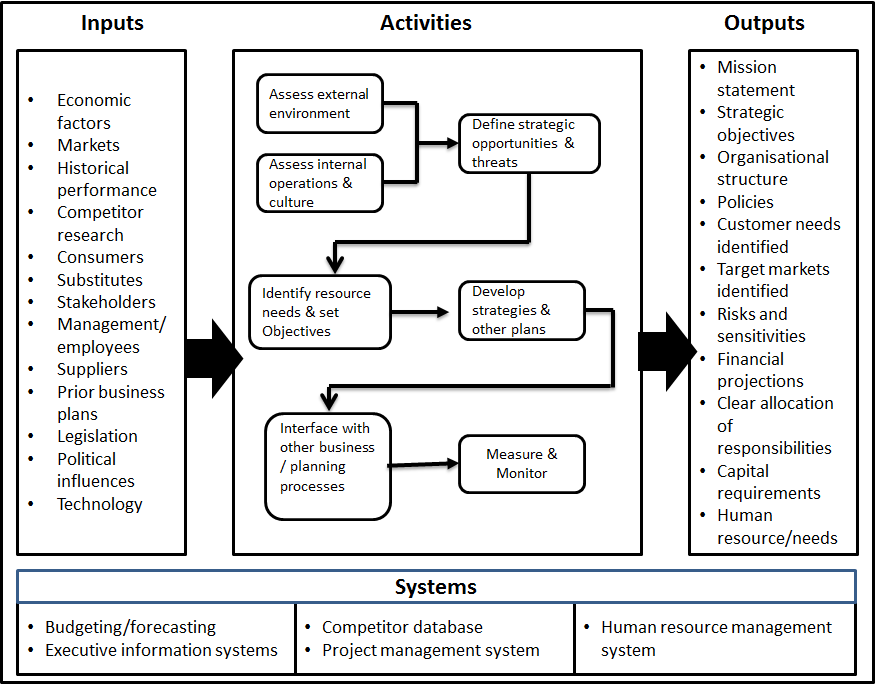
Consumer Goods - Strategic Management Processes

Process Objectives

  1. Provide clear strategic direction to the business
  2. Determine strategic objectives (e.g., profitability/market growth)
  3. Identify and allocate resources necessary to execute business strategy
  4. Measure business performance against strategic objectives
  5. Promote culture of continuous change/improvement
  6. Maximise market value of the business


Critical Success Factors (CSF’s)

KPI’s Linked to CSF’s

  1. Creating and sustaining an appealing proposition to target customer/markets (1,2)
  2. Maximise stakeholder value (4,6)
  3. Successful  management change (3,4,5)
  4. Maximise return on capital (4,6)
  5. Adequate resource management processes (3)
  • Market share; customer surveys (A)
  • Share price; employee surveys; analyst ratings (B)
  • Percent completion  to schedule; improvement in affected process KPI’s (C)
  • Return on equity; return on assets (D)
  • Satisfaction surveys of internal customers (E)


Consumer Products Strategic Processes.png


Risks Which Threaten Objectives

Management Responses Linked to Risks

  1. Poor communication of strategy and implementation (1,2,4)
  2. Poor operating capabilities/lack of appropriate resources (3,6)
  3. Inadequate coordination between resource management and core business processes (1,3)
  4. Missed opportunities/unforeseen threats (new competitors)/changing customer needs (5,6)
  5. Loss of focus or inability to foster change (4,5)
  • Formal board approval of strategy and establishment of targets and objectives through the organization to support its delivery (A)
  • Competitive benchmarking, customer surveys and performance evaluation (B,D)
  • Regular board review of performance against strategic plan using balanced scorecard approach (C,E)
  • Monitoring and responding to external forces (D)
  • Planned performance reviews; disciplined management change process (C,E)


Other Symptoms of Poor Performance

  • Unclear direction
  • Lack of employee involvement


  • Undefined responsibilities
  • Consistent failure to introduce new products/lines


  • Weak market position
  • Poor financial results


  • Performance Improvement Observations

    • More rigorous planning and communication
    • Visioning or needs assessment analyses
    • Introduce performance management systems
    • Balanced scorecard
    • Merger and acquisition assistance
    • More detailed market and competitor research to identify improvement opportunities

    Tuesday, November 18, 2014

    Entity-Level Business Model

    What I have found to be useful is to develop an Entity-Level Business Model based on a standardised framework as the starting point for business modeling.  It is a high-level profile of the Business and the environment in which it operates.  The purpose of gathering information about the business at the entity level is to identify sources of business risk, the entity’s position in the industry  and the key business processes.
    The key business processes are classified as those that are considered critical to attaining the business's objectives and are categorised as:
    1. Strategic Management Processes
    2. Core Business Processes
    3. Resource management process
    Below is a diagram depicting the high level Entity-Level Business Model.

    Entity Business Model Deffinition.png
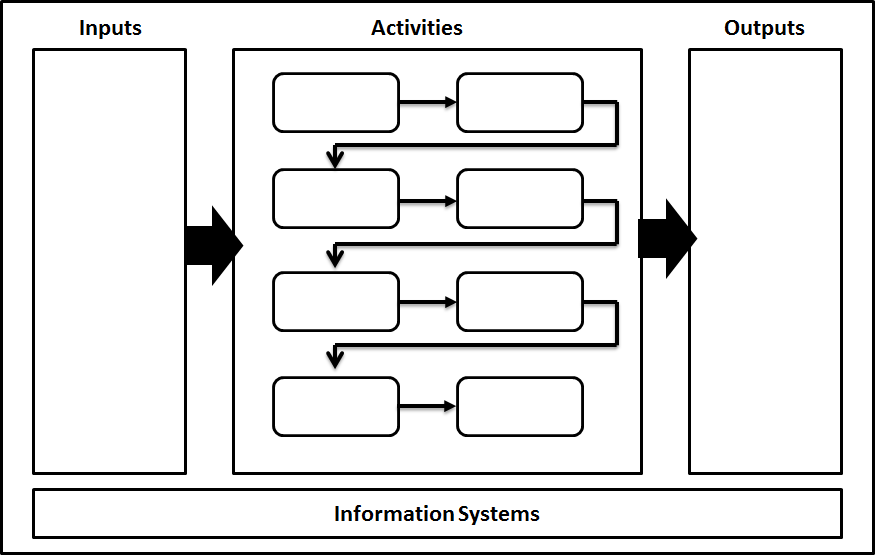
    Each process identified in the Entity-Level Business Model, has the following descriptions:
    • Purpose of the process
    • Diagram of the process in terms of inputs, outputs, activities and information systems
    • Business objectives
    • Critical success factors
    • Key performance indicators
    • Business risks
    • Responses to business risks
    • Internal control
    • Classes of transactions

    Approach

    1. Gain understanding of what information exists, from the organisation’s own documentation, strategic plans, market analysis, process maps, industry knowledge, and market assessments.
    2. Identify the organisations individuals to be involved (e.g. functional managers and process owners).
    3. Engage the organisation in interviews that are well-prepared and focused on the elements of the Entity-Level Business Model.
    4. Complete the Entity-Level Business Model.
    5. Develop a skeleton value chain (Value Chain Analysis).
    6. Educate, review and modify results with the organisation.

    Templates

    Entity Business Model

    Entity Model Template.png

    Business Process Template

    Process Objectives

    Processes are established to serve specific customer needs. The customers may be internal customers, such as another process, or external customers. The process objective defines what value is going to be supplied to the customer. One can look at it as the whole purpose for which the organisation has put together this set of resources and activities. Process objectives need to be specific, measurable, attainable, realistic, and have a sense of time. Most organisations will have fairly similar strategic management processes. However, their core business and resource management processes may differ significantly, as they are shaped by the organization’s strategic objectives and the related critical success factors.

    Inputs

    The inputs to a process represent the elements, materials, resources, or information needed to complete the activities in the process

    Activities

    The activities are those actions or sub-processes that together produce the outputs of the process.  For some processes, arrows are omitted due to the non-sequential nature of the activities.

    Outputs

    The outputs represent the end result of the process—the product, deliverable, information, or resource that is produced.

    Systems

    The systems are collections of resources designed to accomplish process objectives.  Information systems produce reports containing operational-, financial-, and compliance-related information that make it possible to run and control the process.
    BPI Process Template.png

    Classes of Transactions

    The classes of transactions are data and information that are related to the process for use in one or more reports to management or third parties.  The classes of transactions, which are broken down into routine and non-routine transactions and accounting estimates, provide a link from the process to the financial statements of the client.  Every process will have one or more classes of transactions.

    Risks That Threaten Objectives

    Controls Linked to Risks

    Process risks are risks that may threaten the attainment of the processes objectives. Every process has one or more risks threatening the achievement of its objectives.
    Controls are the policies and procedures, which may or may not be put in place, that help provide assurance that the risks are reduced to an acceptable level. The controls are implemented to either reduce, transfer, or avoid the risks associated with the process and its objectives. Management may choose to accept the risk; in this case they will not implement any specific controls. This is an acceptable response.

    Critical Success Factors (CSFs)

    KPIs Linked to CSFs

    Critical success factors (CSFs) are the prerequisites and areas of dependency for a process to be successful.  CSFs may be inputs, parallel or supporting activities, or aspects of a business’s philosophy or infrastructure necessary to ensure the proper delivery of the process. The CSFs relate directly to one or more of the processes objectives. They are normally limited in number.
    Key performance indicators (KPIs) are quantitative measurements, both financial and non-financial, of the process’s ability to meet its objectives and of the process performance. They are usually analyzed through trend analyses within a company or through benchmarking against a peer of the company or its industry. The KPIs that should be listed must be relevant to the CSFs and/or the process objectives.  The KPIs listed must have relevance to the organization. Taken together they should provide a key set of measures for measuring process performance–achieving process objectives.

    Other Symptoms of Poor Performance

    Other symptoms of poor performance represent other evidence that may exist and that indicates the process may not be operating to its most effective level.  The items listed here should lead to performance improvement opportunities listed below.

    Performance Improvement Opportunities

    Performance improvement opportunities are areas for performance or process improvement.  This improvement may be achieved internally by the client or with other third-party assistance.

    Monday, November 17, 2014

    Application Portfolio Analysis

    Before embarking on a Business Process Programme there needs to be sufficient preparation work carried out to create a baseline. The baseline establishes where we are today. Besides selection of an Architecture Tool there needs to be a thorough analysis of the current Application Portfolio. This will establish how the current applications meet the business needs and where there are shortcomings and what needs to do done to align the applications with the current and future business requirements.

    Application Portfolio Analysis

    Application Portfolio Analysis is a method to assist organisations in gaining an understanding of the quantitative and qualitative level of automation of their business as part of a complete Information Technology Assessment.
    The determination of the quantitative level of automation gives insight into the degree to which business processes or business functions are supported by IT, while an analysis of the qualitative level of automation gives a clear view of both the functional and technical levels of satisfaction of this support.
    Typically, this technique is used as one part of an “As-Is” Technology Assessment.  In connection with the financial analysis of the IT environment, the results of this research provide senior management with insight into the evaluation of the automation possibilities within the business model and the current state of IT support of the business functions.
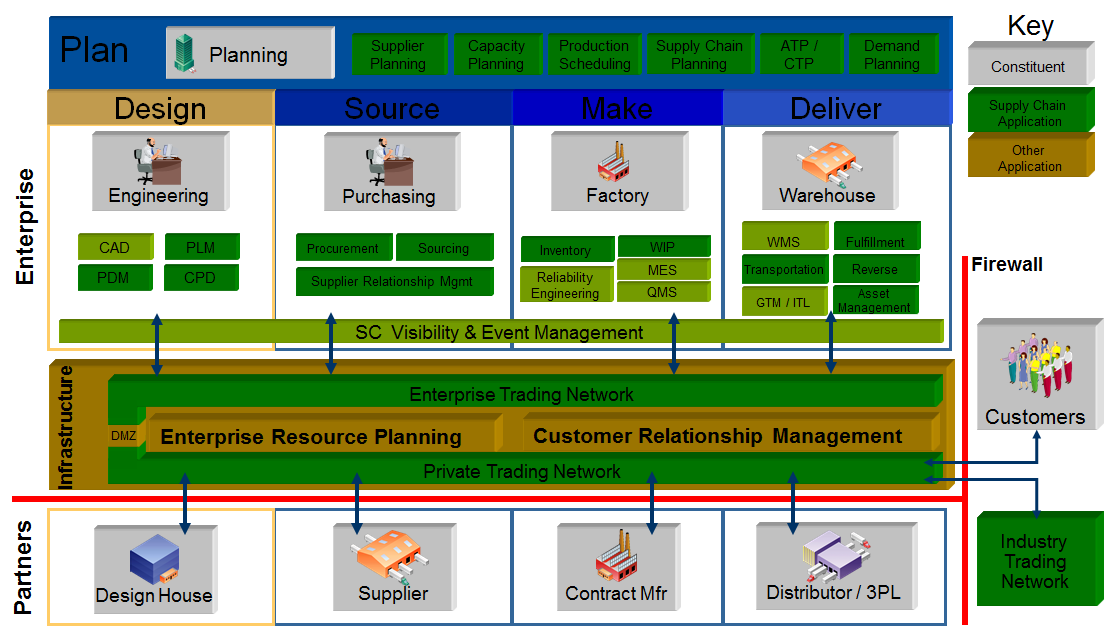
    Application Architecture.png
    The above diagram depicts a typical supply chain organisation and its interfaces to external organisations that can impact business performance. This diagram can be created for any business organisation and provides a basis for comparing the current situation with a vision of future requirements.

    Description

    • A method to assist an organisation to gaining an understanding of the quantitative and qualitative level of automation of an organisation (i.e. as part of a complete Information Technology Assessment). This analysis addresses not only institutional information systems, but also the following:
      • Professional automation (office automation, Computer Aided Design etc.)
      • Process automation, robotics, etc.
      • External information systems
      • Infrastructural systems (telecommunications, data bases, security, etc.)
    • The determination of the quantitative level of automation gives insight into the degree to which business processes or business functions are supported by IT, while an analysis of the qualitative level of automation gives a clear view of both the functional and technical levels of satisfaction of this support.

    When To Use

    • Typically, this technique is used as one part of an “As-Is” Technology Assessment.  In connection with the financial analysis of the IT environment, the results of this research provide senior management with insight into the evaluation of the automation possibilities within the business model and the current state of IT support of the business functions.
    • The technique can be used as a stand-alone analysis—i.e. as a “Quick Scan”—with, naturally, less accuracy than if all the elements of the more-comprehensive Information Technology Assessment are also included.

    Approach


    1. Determine the quantitative level of automation
      1. For the evaluation of the quantitative and qualitative level of automation, identify the general and industry specific business functions for which IT-opportunities exist. Then use this inventory to draw up a business.
      2. Model, so the applications supporting the different business processes or business functions can be mapped.
      3. Make an inventory of the existing applications and other forms of automated support such as personal computer use, PC-tools such as spreadsheets, etc.
      4. Have the users’ organisation determine, by the means of interviews and workshops, which parts of the business functions can be supported by IT (i.e. are able to be automated) and which parts should at all times be carried out manually (or in any other way).
      5. Determine to what degree IT is actually supporting the areas it could be supporting.  In this way, map three fields for the parts that can be automated of each business function :
        1. That which can be automated, but for which, currently no automated system exists (i.e. an opportunity)
        2. That which is intended to be supported by IT and for which IT systems are developed (i.e. attempted coverage)
        3. That which is actually supported by IT (i.e. effective coverage)
      6. Be aware that the functional quality (ease of use, accuracy of information, etc.) determines the difference between the attempted and the effective coverage.  In the end, the level of automation for all business functions can be represented graphically.
    2. Determine the qualitative level of automation, by means of questionnaires and interviews, subsequently determine how effectively the business functions are supported by automation.
      1. Make a distinction between the technical and functional quality of the application.  Be aware that users form an opinion on the functional quality, with regard to aspects such as:
        1. Reliability of information
        2. Reporting and request possibilities
        3. Ad hoc reporting
        4. User friendliness.