Friday, January 10, 2014

Core Business Process - Distribute Products

Description

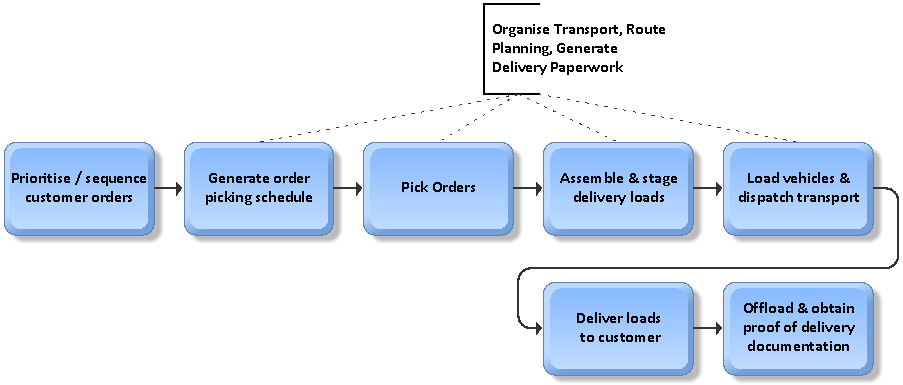
This process manages the activities that are used to distribute the entity’s finished products to the customers logistic centres.  

Process Objectives

  1. Improve on-time delivery of products
  2. Improve order fill rate
  3. Provide excellent customer service at optimal cost
  4. Finished goods assets secured
  5. Product quality maintained
  6. Reduce order fulfillment cycle

Critical Success Factors (CSF’s)

  1. Good understanding of customer delivery requirements (1,2,3,5)
  2. Accurate stock recording and rotation (1,2,6)
  3. Accurate order picking (2,3,6)
  4. Performance-based contracts with transport providers (1,6)
  5. Maintain goods in a protected, secure environment (4,5)

Key Performance Indicators (KPI’s) Linked to CSF’s

  • On-time delivery rate; order fill rate; order fulfillment cycle time (A,B,C,D)
  • Days supply; distribution inventory turnover (A,B,C)
  • Order picking accuracy (C)
  • Total logistics cost per case (D)
  • Number of cases lost or damaged in the warehouse (E)

Inputs

  • Finished goods in warehouse
  • Customer delivery point data
  • Equipment
  • Utilities
  • Finished goods stock records
  • Service level targets / priorities
  • Security
  • Delivery packaging and pallets
  • Transport resources
  • Labour
  • Customer orders

Activities

Outputs

  • Ordered goods in customer’s warehouse
  • Load utilisation data
  • Customer invoicing data
  • Closing stock level in manufacturer’s warehouse
  • Customer service measurements

Systems

  • Inventory recording system
  • Order picking system
  • Pallet recording system

Classes of Transactions

Routine
  • Inventory movements
  • Invoicing
Non-Routine
Accounting Estimates
  • Reserve for obsolete inventory

Risks Which Threaten Objectives

  1. Incomplete/inaccurate customer orders (1,2,3,6)
  2. Non-competitive distribution services (1,2,3,5,6)
  3. Poor stock rotation/management (4,5,6)
  4. Unreliable transportation providers (1,2,3,6)
  5. Inadequate warehouse facilities (4,5)

Management Responses Linked to Risks

  • Monitor on-time performance and accuracy of shipments to customers orders (A,B,D)
  • Monitor distribution costs vs budget and service against “best practices” and competition (A,B,D)
  • Measure inventory turnover and days supply in warehouse (C,E)
  • Use performance-based contracts with carriers (D)

Other Symptoms of Poor Performance

  • No delivery performance data
  • No transport/order picking schedules
  • Untidy warehouse
  • High level of back orders
  • Poor stock records

Performance Improvement Observations

  • Continuous replenishment programmes
  • Logistics studies
  • Cross-docking programmes
  • Distribution facility network optimisation
  • Activity-based costing (cost-to-serve analysis)
  • Cost restructuring models

Thursday, January 9, 2014

Core Business Processes - Manufacture Products

Process Name

Description

This process manages the activities that are used to produce the entity’s products.  The planning and materials management aspects are included in this process.

Sub Process Components


Production Planning & Material Management

Process Objectives

  1. Efficient use of resources
  2. Smooth supply chain flow
  3. Minimal stock in supply chain
  4. Plans which can meet customer needs
  5. Maximisation  of capacity

Critical Success Factors (CSF’s)

     A.   Efficient delivery of raw materials (1,2,3)
     B.  Optimal raw material stocks (1,2,3)
     C.   Accuracy of management data and forecasts (3,4,5)
     D.   Integrated approach to planning (2,3,4,5)

Key Performance Indicators (KPI’s) Linked to CSF’s

  • Supplier on-time delivery percentage (A)
  • Raw material inventory turns (B)
  • Actual sales vs forecasts (C)
  • Material usage vs planned (D)

Inputs

  • Suppliers
  • Lead times
  • Supply requisitions
  • Labour force
  • Promotional plans
  • Bills of Material (BOM)
  • Opening stock levels
  • Purchase orders
  • Sales forecasts
  • Customer orders
  • Materials storage
  • Materials planning system
  • Stock-holding policy
  • New product development plans
  • Material availability

Activities


Outputs

  • Closing stock levels
  • Supplier delivery performance data
  • Material requirements
  • Materials to meet plan
  • Production schedules
  • Maintenance requirements
  • Goods received notes
  • Labour requirements

Systems

  • Purchase order system
  • Bill of Material (BOM) files
  • Materials planning system
  • Sales forecasting system
  • Production planning system
  • Materials databases

Classes of Transactions

Routine
  • Receipt of materials
Non-Routine
  •  
Accounting Estimates
  • Reserve for obsolete inventory
  • Inventory valuation (commodities businesses that record at market)

Risks Which Threaten Objectives

       A.  Sales forecasting and planning tools not integrated (1,2,3,4,5)
       B.  Poor communication internally and with suppliers (1,2,3,5)
       C.  Inaccurate BOM files (1,3)
       D.  Unresponsive suppliers (1,2,3)

Management Responses Linked to Risks

  • Use of cross-functional production planning process (A)
  • Continuously monitor actual vs plan and communicate changes (A,B)
  • Frequently update/check BOM file accuracy (C)
  • Monitor supplier performance (D

Other Symptoms of Poor Performance

  • Long lead time
  • High inventory levels
  • Improper delivery quantities
  • Key drivers not included in planning

Performance Improvement Observations

  • Enterprise package solution
  • Activity-based costing
  • Supply chain integration
  • Business process re-engineering

Conversion

Process Objectives

  1. High quality products
  2. Low unit costs
  3. Customer responsiveness
  4. Minimal inventory in supply chain
  5. Production effectiveness

Critical Success Factors (CSF’s)

     A.  Optimum use of manufacturing resources (1,2,4,5)
     B.  Use of quality assurance and preventative maintenance programmes (1,2,3,4)
     C.  Use of good manufacturing practice (1,5)
     D.  Productive workforce (2,5)

Key Performance Indicators (KPI’s) Linked to CSF’s

  • Capacity utilisation; changeover time; overall equipment effectiveness rate (A,B,C)
  • Scrap rate; percentage of overhead (burden) rates and variances spending on preventative maintenance (B,C)
  • Government/industry ratings (C)
  • Labor efficiency rates (D)

Inputs

  • Opening finished goods stocks
  • Consumables
  • Production schedules
  • Stock-holding policy
  • Plant and equipment
  • Maintenance schedules
  • Raw / packing materials
  • Labour
  • Utilities (heat, power, etc.)

Activities


Outputs

  • Closing stocks of finished goods
  • Production performance data
  • New stocks of materials
  • Work in process

Systems


  • Production scheduling
  • Production control
  • Inventory control

Classes of Transactions

Routine
  • Production of inventory
  • Movement of inventory (transfer pricing)
Non-Routine
  • Bill and hold transactions
Accounting Estimates

Risks Which Threaten Objectives

      A.  Poor material flow and quality (1,2,4,5)
      B.  Production capability does not match production needs (2,3,4,5)
      C.  Badly maintained production equipment (2,4,5)
      D.  Workforce that is not committed to producing high quality goods (1,3)

Management Responses Linked to Risks

  • Use of effective preventative maintenance programmes (A,C)
  • Use of modular manufacturing systems or contract manufacturing (B)
  • Monitor production/maintenance costs (C)
  • Employee awareness programs which emphasize quality (A,D)
  • Incentive pay base on performance (D)

Other Symptoms of Poor Performance

  • Sub-optimal capacity utilisation
  • Lost time accidents
  • Absenteeism rates
  • Poor labour utilisation

Performance Improvement Observations


  •  Activity-based costing
  • Transfer pricing studies
  • Business process Improvement
  • Production facilities optimisation
Quality Management programmes

Tuesday, January 7, 2014

Core Business Processes - Procure Materials

Procure Materials

Description

This process manages the entity’s supplier and the entity’s interaction with its suppliers

Sub Process Components


Supplier Management

Process Objectives

  1. Appropriate mix of suppliers
  2. Quality assured supply
  3. A supply base committed to continuous improvement
  4. Enhanced margin through cost reduction
Critical Success Factors (CSF’s)

     A.  Suppliers provide superior delivery performance (1,2)
     B.  Clarity of specification (of materials and performance) (1,2)
     C.  Proactive management of supplier relationships (3,4)

Key Performance Indicators (KPI’s) Linked to CSF’s

  • Supplier on-time delivery performance (A)
  • Supplier quality performance (B)
  • Ratio of materials to suppliers; material unit cost trends (C)

Inputs


  • Supply base analysis
  • Cost targets
  • Quality assurance standards
  • Manufacturing processes

  • Material requirements
  • Previous performance data
  • Sourcing strategy

  • Material specifications
  • New product development
  • Product direction / strategy
Activities


Outputs


  • Approved suppliers
  • Purchase price performance data


  • Purchase orders / contracts
  • Delivery of materials / services


  • Agree on supplier performance measures

Systems


  •  Purchasing system
  • Production forecasting and planning systems


  • Quality assurance procedures


  • Material specification procedures

Classes of Transactions

Routine

  •  Accrual of vendor rebates / discounts
Non-Routine

  • Long-term contracts / commitments with suppliers
Accounting Estimates

Risks Which Threaten Objectives

     A.  Poor quality suppliers (2,3)
     B.  Ineffective supplier selection process (1,2,3)
     C.  Lack of focus on value-added purchasing (3,4)
     D.  Long delivery lead time (2)
     E.   Lack of secondary (backup) suppliers (1,2)

Management Responses Linked to Risks


  • Supplier assessment and selection procedures (A,B)
  • Robust supplier performance measurement system (A,B,E)
  • Purchase price analysis systems (C)
  • Just-in-time inventory strategy (D)


Other Symptoms of Poor Performance


  • Unclear direction
  • Lack of employee involvement


  • Undefined responsibilities
  • Consistent failure to introduce new products/lines


  • Weak market position
  • Poor financial results

Performance Improvement Observations

  • Supply base rationalisation
  • Vendor partnering strategy
  • Procurement process improvement
  • Supply chain integration
  • Procurement team training / development

Purchase Order Management

Process Objectives

  1. Communicate material demands to suppliers
  2. Establish procurement; receipt; payment cycle
  3. Establish requirements and prices with suppliers

Critical Success Factors (CSF’s)

     A.   Efficient communications links with suppliers and internal customers (1,3)
     B.   Use of just-in-time purchasing (2,3)

Key Performance Indicators (KPI’s) Linked to CSF’s

  • Purchase order error rate; percentage of purchase orders transmitted via EDI; percentage of invoices received via EDI (A)
  • Suppliers continuous replenishment programme (CRP) performance; raw material CRP performance, raw material turnover ratio (B)

Inputs

  • Material requirements
  • Supply requisitions
  • Negotiated prices
  • Material specifications
  • Bills of Material (BOM)
  • Capital authorisation
  • Supply base
  • Lead times

Activities


Outputs

  • Purchase orders / supply contracts
  • Inventory information
  • Purchase price performance data
  • Payment items

Systems

  • Purchase order
  • Bills of Material
  • Manufacturing scheduling
  • Requisition
  • Accounts payable

Classes of Transactions

Routine

  • Purchase orders
  •  Invoices
  • Cash disbursements
Non-Routine

  • Bill and hold transactions
  • Consignment stock contracts
Accounting Estimates

  • Commodity hedging valuation
  • Vendor return allowance

Risks Which Threaten Objectives

    A.   Inefficient purchase order system workflow (1,2)    B.   Too many people in the process, poor communications    C.   Suppliers invoicing for appropriate price, quantity (1,3)

Management Responses Linked to Risks

  • Use of integrated systems (e.g., manufacturing, procurement, accounts payable) (A,B)
  • Extensive use of electronic data interchange (EDI) transactions (A,B)
  • Monitor purchase order, material receipt, invoice clearance/payment cycle (C)

Other Symptoms of Poor Performance


  • High level of activity surrounding purchase order processing
  • Inordinate time between order commitment and purchase order usable by accounts payable
  •  

Performance Improvement Observations

  • EDI application installation
  • Enterprise package solution implementation
  • Business process re-engineering
  • Duty draw-back service